If you’ve spent any time on social media, messaging apps, or online forums, you’ve probably come across the phrase “FML.” It often appears after an embarrassing mistake, an unexpected problem, or a frustrating situation.
Many people search for “text FML meaning” because they see it in conversations and aren’t sure whether it’s a joke, an insult, or something more serious. The abbreviation can seem confusing, especially for parents, educators, or anyone unfamiliar with internet slang.
Understanding FML helps decode modern digital communication. Beyond its literal meaning, it reveals how people express frustration, disappointment, humor, and even self-awareness in today’s fast-moving online culture.
In this guide, you’ll learn exactly what FML means, where it came from, how people use it in real conversations, and when it’s appropriate—or inappropriate—to use.
Text FML Meaning – Quick Meaning
Definition
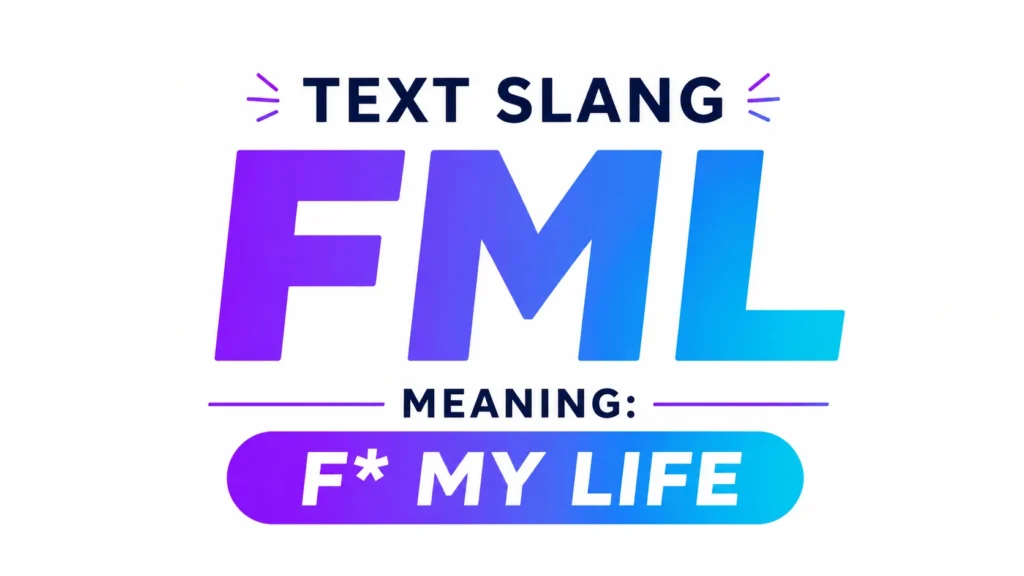
FML stands for:
“F* My Life.”**
It is a slang expression people use when something annoying, embarrassing, disappointing, or unfortunate happens.
Most of the time, it is not meant literally. Instead, it exaggerates frustration for emotional effect.
Quick Breakdown
- Expresses annoyance or disappointment
- Often used humorously
- Common in texting and social media
- Usually not a serious statement about life
- Frequently follows a minor personal setback
Examples
“I studied all night and still failed the quiz. FML.”
“Dropped my phone in the sink this morning. FML.”
“Forgot my wallet at home after driving 30 minutes. FML.”
In each example, the speaker is expressing frustration rather than making a serious life statement.
Origin & Background
Where Did FML Come From?
The phrase originated long before social media became mainstream. People occasionally used the full expression in casual speech to describe extremely frustrating situations.
As texting culture expanded in the early 2000s, abbreviations became popular. Just as people started using LOL, BRB, and OMG, FML emerged as a quicker way to communicate emotions.
The Rise of Internet Culture
FML gained major popularity through websites where users shared stories about bad luck, embarrassing moments, and everyday disasters.
People enjoyed reading relatable experiences because they reflected common human frustrations.
Social Media Influence
Platforms like Twitter, Facebook, Instagram, TikTok, and Snapchat accelerated the spread of FML.
Its short format made it perfect for captions, comments, and quick reactions.
How the Meaning Evolved
Originally, FML sounded harsh and dramatic.
Over time, its meaning softened.
Today, many people use it jokingly after small inconveniences such as:
- Missing a bus
- Spilling coffee
- Losing Wi-Fi
- Forgetting a password
The expression often communicates humor as much as frustration.
Real-Life Conversations
WhatsApp Conversation
Person A:
I just realized the meeting started 20 minutes ago.
Person B:
Wait, weren’t you presenting today?
Person A:
Exactly. FML.
Person B:
Okay, that’s actually rough.
Instagram DM Conversation
Person A:
I posted the wrong photo and didn’t notice for two hours.
Person B:
How bad was it?
Person A:
Let’s just say everyone saw it. FML.
TikTok Comments
Person A:
Spent three hours making this video and accidentally deleted it.
Person B:
No way.
Person A:
Yep. FML.
Person B:
I would’ve cried.
Text Message Conversation
Person A:
My alarm never went off.
Person B:
So you’re late?
Person A:
Late and my boss noticed. FML.
Person B:
That’s painful.
Emotional & Psychological Meaning
What Emotion Does It Express?
FML commonly communicates:
- Frustration
- Embarrassment
- Disappointment
- Helplessness
- Self-deprecating humor
The phrase helps people release emotional tension in a quick and relatable way.
Why Do People Use It?
Humans naturally seek emotional connection.
When someone says FML, they’re often inviting empathy from others.
Instead of explaining every detail, they use a simple abbreviation to communicate a shared feeling.
Modern Communication Habits
Digital communication rewards speed.
Short expressions like FML allow people to instantly signal emotional states without writing lengthy explanations.
Personal-Style Scenario
Imagine arriving at the airport after carefully planning your trip, only to discover your passport is still sitting on your kitchen table.
In that moment, many people would instinctively text a friend:
“Just got to the airport and forgot my passport. FML.”
The phrase captures frustration, embarrassment, and disbelief all at once.
Usage in Different Contexts
Social Media
FML frequently appears in:
- Captions
- Tweets
- Comments
- Memes
- Story updates
Users often pair it with humorous content to make difficult situations feel lighter.
Friends and Relationships
Among friends, FML is usually understood as a casual expression.
It often strengthens social bonds because people relate to everyday struggles.
Work and Professional Settings
Professional environments require caution.
Many workplaces consider FML too informal because it contains profanity, even in abbreviated form.
Casual vs Serious Tone
Casually:
“Locked my keys in the car. FML.”
More seriously:
“Losing my job today. FML.”
The phrase can cover both minor and significant setbacks, although context changes how people interpret it.
When NOT to Use It
Professional Communication
Avoid using FML in:
- Business emails
- Job applications
- Formal presentations
- Workplace reports
Professional communication typically requires more neutral language.
Sensitive Situations
Some situations deserve greater emotional sensitivity.
Examples include:
- Serious illness
- Family tragedies
- Major accidents
- Loss of a loved one
Using FML in these contexts may appear dismissive or inappropriate.
Cultural Differences
Not everyone understands internet slang.
Some people may interpret the phrase literally or view it as offensive.
Situations That Create Confusion
Older audiences or non-native English speakers might not recognize the abbreviation.
Clear language often works better when communication accuracy matters.
Common Misunderstandings
People Think It Is Always Serious
Many assume someone using FML is experiencing a major crisis.
In reality, it often refers to small everyday frustrations.
Tone Can Be Misread
Text lacks facial expressions and vocal cues.
As a result, readers may struggle to determine whether the writer is joking or genuinely upset.
Literal vs Figurative Meaning
Literally, the phrase sounds extreme.
Figuratively, most users simply mean:
“This situation is really frustrating.”
Not Always Negative
Surprisingly, FML can be playful.
Friends often use it while laughing about a mistake or embarrassing moment.
Comparison Table
| Expression | Meaning | Tone | Typical Usage |
|---|---|---|---|
| FML | Something frustrating happened | Annoyed, humorous | Everyday setbacks |
| SMH | Shaking my head | Disapproval | Poor decisions |
| UGH | General frustration | Mild annoyance | Minor irritation |
| RIP Me | I’m doomed or embarrassed | Humorous | Social mistakes |
| My Bad | Admitting fault | Apologetic | Personal mistakes |
| Lucky Me | Positive outcome | Optimistic | Good fortune |
| Thank Goodness | Relief | Positive | Problem solved |
| LOL | Amusement | Lighthearted | Funny situations |
Key Insight
FML stands out because it combines frustration with exaggeration. Unlike many slang expressions, it often communicates both emotional stress and humor at the same time.
Variations / Types
FML
The standard form expressing frustration.
Major FML Moment
Used for especially embarrassing situations.
FML Today
Highlights a bad day or series of problems.
Instant FML
Something goes wrong unexpectedly.
FML Energy
Refers to a generally unlucky mood.
Weekend FML
A frustrating event occurring during leisure time.
Relationship FML
Used after dating or relationship disappointments.
School FML
Academic stress or mistakes.
Work FML
Problems related to employment or office life.
Travel FML
Unexpected travel mishaps and delays.
How to Respond When Someone Uses It
Casual Replies
- “That sucks.”
- “What happened?”
- “I feel your pain.”
- “That’s rough.”
Funny Replies
- “The universe chose violence today.”
- “Achievement unlocked: worst luck.”
- “That’s a movie-level disaster.”
Mature Replies
- “I’m sorry you’re dealing with that.”
- “Take a moment and regroup.”
- “You’ll get through it.”
Respectful Replies
- “That sounds frustrating.”
- “I hope things improve soon.”
- “Let me know if I can help.”
Regional & Cultural Usage
Western Culture
FML is widely recognized throughout North America, the United Kingdom, and Australia.
People commonly use it in casual digital communication.
Asian Culture
Usage varies by country.
Younger internet users generally understand the abbreviation, while older generations may not.
Middle Eastern Culture
Recognition is increasing due to global social media exposure.
However, some users prefer less explicit language because of cultural sensitivities.
Global Internet Usage
Online communities have made FML an internationally recognized slang term.
Its meaning remains fairly consistent across platforms.
Generational Differences
Gen Z
Uses FML casually, often with humor and irony.
Millennials
Generally understand both its humorous and serious uses.
Older generations may encounter it less frequently and interpret it more literally.
Is It Safe for Kids?
Understanding the Context
Parents should know that FML contains an implied profanity.
Although many teenagers use it casually, the abbreviation originates from a phrase that includes strong language.
Context matters.
Seeing FML in a message does not automatically indicate serious emotional distress. In many cases, it simply reflects frustration about an everyday problem.
Even so, teaching children alternative ways to express emotions can encourage more thoughtful communication.
FAQs
What does FML mean in texting?
FML stands for “F*** My Life” and expresses frustration, disappointment, or embarrassment.
Is FML considered rude?
It can be. Because it contains an implied profanity, some people consider it inappropriate in formal settings.
Do people use FML seriously?
Sometimes. However, it is most commonly used humorously after minor setbacks.
Is FML popular among Gen Z?
Yes. Many Gen Z users recognize and use FML across social media and messaging platforms.
Can I use FML at work?
Generally, no. Professional communication is usually better served by more neutral language.
What is the difference between FML and SMH?
FML expresses personal frustration, while SMH usually shows disappointment or disbelief about someone else’s actions.
Does FML always mean someone is unhappy?
Not necessarily. Many people use it jokingly to make light of an annoying situation.
Conclusion
Understanding the text FML meaning is about more than decoding internet slang. The phrase reflects how people share frustration, embarrassment, and humor in modern digital communication.
While its literal wording sounds dramatic, most users employ it playfully to describe everyday inconveniences. From social media posts to private text messages, FML has become a shorthand way of saying, “Today didn’t go as planned.”
Knowing when to use it—and when to avoid it—helps you communicate more effectively across different audiences and situations. Whether you’re navigating online conversations, helping a child understand internet slang, or simply trying to keep up with modern expressions, recognizing the emotional context behind FML makes its meaning much clearer.
Use it thoughtfully, understand the audience, and you’ll never be confused by this popular abbreviation again.